Cargo Van vs Passenger Van: Best for Van Life (2026)
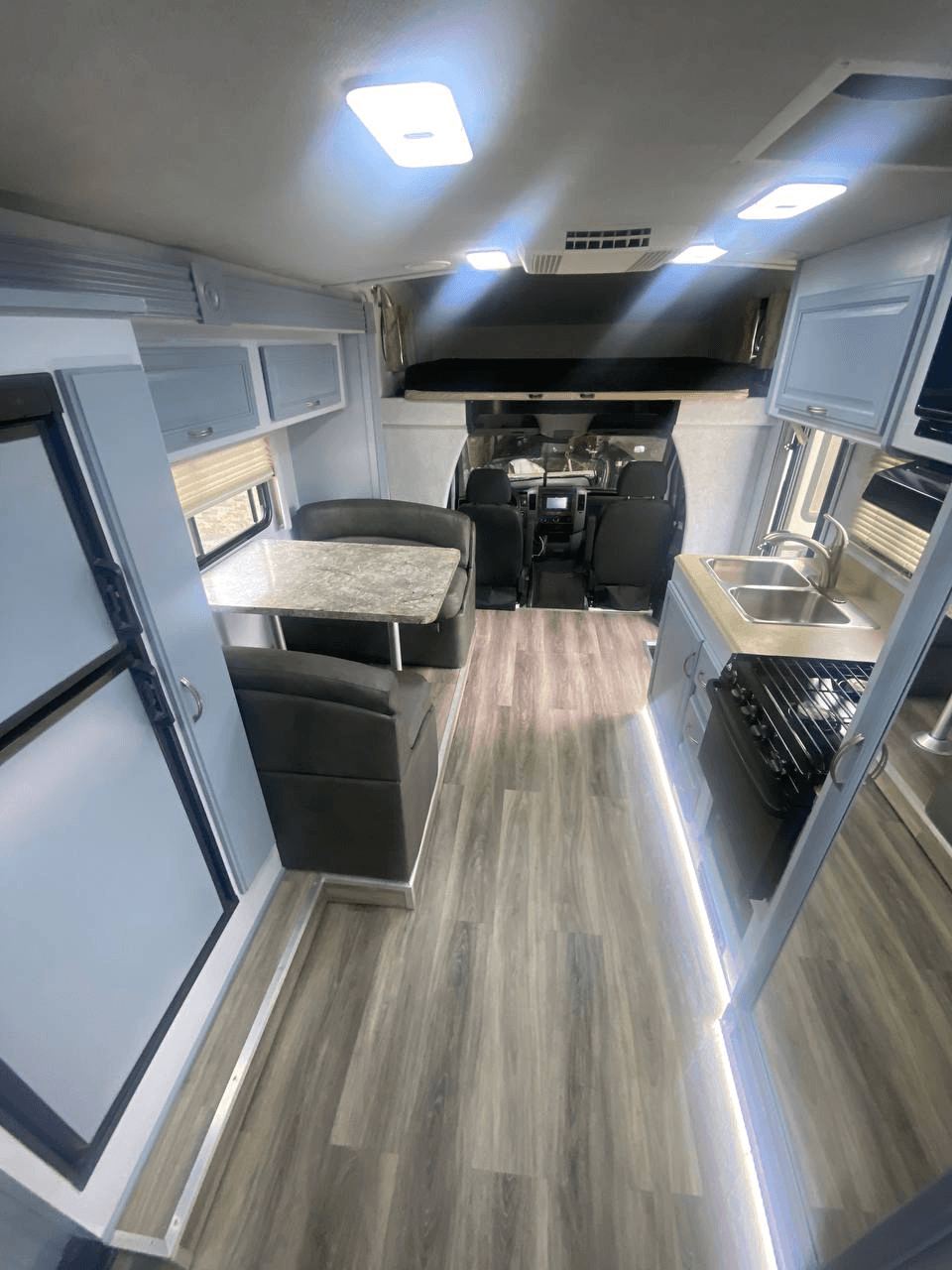
Photo by [Custom Way](https://custom-way.com). Licensed for editorial use.
Best Van for Van Life Conversion (2026 Comparison)
We bought our 2016 Ram Promaster 1500 high-roof with 52,000 miles for $18,500 in 2023. It was the right van for us. It's the wrong van for someone else. The best van for conversion depends on your budget, your body size, where you're driving, and whether you plan to wrench on it yourself or pay a shop. This guide breaks down ten real options with honest assessments of each, based on what we've seen on the road and heard from hundreds of van lifers at campgrounds from Rattlesnake Lake to Fort De Soto Park.
Factors to Consider When Choosing a Van
Before the brand comparisons, let's talk about what actually matters when you're picking a van to live in. These are the specs that determine whether you'll love your build or resent it six months in. Want to see how your van choice affects the total budget? Our Van Life Cost Calculator factors in fuel, insurance, and maintenance costs across all 50 states.
Interior standing height. This is the single most important spec that people underestimate. If you can't stand up straight inside your van, you will feel it within a week. The high-roof Ram Promaster gives you 76 inches of interior height. The high-roof Ford Transit gives you 81.5 inches. The standard-roof Sprinter gives you 74 inches. Those two to seven inches make a massive difference when you're spending every waking hour inside the space.
Wheelbase and floor plan length. Longer wheelbase means more room for a proper bed, kitchen, and sitting area. The 159-inch wheelbase Promaster and the 148-inch Transit are the sweet spots for most conversions. Anything shorter and you're compromising on the bed or the kitchen. Anything longer and maneuverability suffers in cities and tight forest roads. A good rule: if you're over 6 feet tall, go for the extended wheelbase. Your bed will thank you.
Drivetrain. Front-wheel drive (Promaster, Transit FWD) handles better in rain and is cheaper to maintain. Rear-wheel drive (Sprinter, Transit RWD) is better for towing and handles heavy loads more naturally. All-wheel drive exists on the Transit and Sprinter and is worth considering if you plan winter camping or mountain driving. We drive FWD and have managed fine on most forest roads, though we've turned around a few times where a 4x4 would have kept going.
Parts availability and repair cost. A Promaster's engine is a Fiat design, and Fiat parts can be harder to find in rural America. Sprinter parts are widely available through dealer networks but cost more. Ford Transit parts are available at any Ford dealer and many auto parts stores. If you're going to be remote for weeks at a time, the Transit's parts network is a real advantage.
Fuel economy. Expect 16 to 22 mpg depending on the van, engine, and driving conditions. The Transit's EcoBoost engine gets the best highway numbers. The Promaster's V6 is thirstier but simpler mechanically. Diesel Sprinters get the best fuel economy but cost significantly more to maintain. Over a year of driving 24,000 miles, the fuel cost difference between 18 mpg and 22 mpg is about $600 at current prices. Not nothing, but not enough to base your decision on.
Payload capacity. Your van build, plus your stuff, plus water, plus fuel, plus you and whoever's riding with you. A full build can weigh 1,500 to 2,500 pounds. Water adds 8.3 pounds per gallon. A 30-gallon water system adds 250 pounds. Check the payload rating on the door jamb sticker before you buy. Many half-ton vans (1500 series) are closer to their limit than you'd think once the build is finished.
Top 10 Best Vans for Conversion
1. Ram Promaster (1500/2500, high-roof, 159WB) The van life community's default choice for good reason. The front-wheel-drive layout means no driveshaft tunnel, giving you a completely flat floor from the driver's seat to the back doors. Interior width is the widest in its class at 75.6 inches. That extra width means a bed that runs side-to-side instead of front-to-back, which changes everything about the floor plan. High-roof models let most people stand upright. The 3.6L V6 gas engine is adequate if not quick. Parts availability is the main complaint, though it's improved since Stellantis took over. Starting price for a used one in good shape: $15,000 to $25,000.
2. Ford Transit (250/350, high-roof, 148WB) The strongest all-around contender. Available in FWD, RWD, and AWD configurations. The 3.5L EcoBoost V6 gets the best fuel economy in the segment at 18 to 22 mpg highway. Parts are available everywhere. Interior height in the high-roof model is 81.5 inches, which is tall enough for anyone under 6'7" to stand. The AWD option makes it the best choice for van lifers who want year-round access to mountain areas. Starting price for a used one: $18,000 to $30,000.
3. Mercedes-Benz Sprinter (2500, high-roof, 170WB) The premium option. The Sprinter rides better than anything else in this segment, handles like a car, and the diesel engine gets 20 to 24 mpg. Build quality is noticeably better than the American options. The 170-inch extended wheelbase gives you enormous cargo space. The downsides are real: dealer service costs are high, parts are expensive, and the electronics are complex enough that DIY repairs on the engine are nearly impossible. Starting price for a used one: $25,000 to $45,000.
4. Mercedes-Benz Sprinter 4x4 The overland van. If you plan to drive forest roads in the Cascades, the Rockies, or the Southwest, the 4x4 Sprinter with its high ground clearance and locking differential opens up camping options that 2WD vans can't reach. Diablo Lake and other mountain-adjacent sites become much more accessible. The trade-off is a $10,000 to $15,000 premium over the 2WD version, plus worse fuel economy due to the added drivetrain weight. If you don't plan to go off-road, skip it.
5. Ram Promaster 4x4 (new for 2024+) Finally, a 4x4 Promaster. It uses a different AWD system than the Sprinter 4x4 but gets you off-pavement capability at a lower price point. Early reports from the van life community are positive for light off-road use. It won't match the Sprinter 4x4's ground clearance, but for most van lifers it's enough. Used prices haven't stabilized yet since these are relatively new on the market.
6. Ford E-Series (E-250/E-350) The old-school choice. The E-Series is body-on-frame, rear-wheel drive, and built like a tank. Parts are cheap and available everywhere. It's heavier and thirstier than modern options (13 to 16 mpg), but it's tough and the interior box is nearly as wide as the Promaster. These are the cheapest option on this list if you can handle the fuel cost. Good used examples: $8,000 to $15,000.
7. Nissan NV2500/NV3500 The budget workhorse. Nissan discontinued the NV after 2021, but used ones are affordable and the VQ35DE V6 engine is proven reliable. Interior volume is slightly less than the Promaster but still workable for a conversion. The high-roof model has decent standing height. Parts availability is good through Nissan dealers. The NV is a solid choice if you find a low-mileage example at a good price. Used prices: $10,000 to $18,000.
8. Nissan NV200 Compact Cargo The small van option. If you want something easy to drive, park, and fuel, the NV200 gets 24 to 29 mpg and fits in standard parking spaces without a second thought. The trade-off is limited interior space. You can build a functional micro-camper in one, but you'll compromise on standing height and storage. Best for solo travelers who prioritize fuel economy and maneuverability over space. Used prices: $8,000 to $14,000.
9. Chevy Express / GMC Savana The American classic. These haven't had a major redesign since 1996, which means parts are everywhere and every mechanic knows how to fix them. The V8 engines are thirsty (12 to 15 mpg) but reliable to a fault. Interior height is limited compared to modern European vans, and the floor isn't flat due to the rear-wheel-drive tunnel. They're cheap and tough, which is their appeal. Good used examples: $7,000 to $14,000.
10. Volkswagen Transporter T6/T7 The European option. If you're looking at a smaller van that can still handle a basic conversion, the VW Transporter is nimble, fuel-efficient (28 to 34 mpg with the diesel), and has a cult following. The interior is tight for anything beyond a micro-build, and parts require a VW dealer or specialist. Best for weekend warriors or those who want a compact daily driver that doubles as a camper.
Cargo Van vs Passenger Van vs Class B
Start by knowing your budget — try the calculator
Try the Cost CalculatorFree · Based on 2026 real data · All 50 states
Free · 2026 data · All 50 states
Cargo vans are the standard starting point for conversions. They come without rear seats, windows are often missing (or you can add them), and the interior is a blank canvas. Every van on the list above is a cargo van. This gives you maximum flexibility for your floor plan and you're not paying for interior panels you'll rip out.
Passenger vans come with rear seats, windows, and interior panels already installed. They're more expensive to buy because of the factory options, and you'll pay someone to rip all that out before your conversion starts. The one advantage is that passenger vans are registered as passenger vehicles in most states, which can simplify insurance and registration. Some states charge lower registration fees for passenger vehicles versus commercial cargo vans. If the price difference is small and you don't mind the removal work, a passenger van can work.
Class B motorhomes are factory-built camper vans built on van chassis like the Sprinter or Transit. Winnebago, Roadtrek, and Pleasure-Way all make them. They're turnkey, professionally built, and come with warranties. The trade-off is cost. A used Class B starts at $50,000 and goes well past $100,000 for new models. The layouts are designed by professionals and the build quality is generally better than most DIY conversions. If you have the budget and don't want to build yourself, a Class B is the fastest path to van life.
Budget Breakdown: Van Purchase + Conversion Cost
Here's what three realistic budget tiers look like in 2026, based on current market prices and conversion costs we've collected from the community:
| Budget Tier | Van | Conversion | Total | What You Get |
|---|---|---|---|---|
| Bare Bones | $10,000 NV200 or E-250 | $3,000 DIY | $13,000 | Bed platform, basic insulation, cooler, camp stove, no solar |
| Sweet Spot | $20,000 Promaster 150 | $8,000 DIY | $28,000 | Proper insulation, 200W solar, fridge, 2-burner stove, bed, fan |
| Comfortable | $25,000 Transit high-roof | $15,000 DIY | $40,000 | Full build: shower, indoor kitchen, 400W solar, lithium battery, MaxxAir fan |
The "sweet spot" tier is where most van lifers land, and it's what we'd recommend. The bare bones setup works but you'll feel the compromises within a month. The comfortable tier is great if you have the savings, but don't go into debt for it. You can always add to a sweet spot build over time as you learn what you actually need.
One thing we wish someone had told us before we started: budget for the van and the build separately. We nearly blew our budget on the van itself and had to scramble for conversion money. Set aside at least 30 percent of your total budget for the build, and keep a $2,000 emergency fund for the first year of unexpected maintenance. Something will break. It always does. The question is whether you have money set aside for it.
If you're exploring conversion options and want to see where to test drive your finished build, the Colorado campgrounds are a great place to start. The camping is affordable, the scenery keeps you motivated during the build process, and there's a huge van life community in the Front Range area that's happy to share advice. Also worth noting: after choosing your van, the cost of van conversion depends on your build tier.
FAQ
What's the most reliable used van for conversion?
The Ford Transit with the 3.5L V6 and the Ram Promaster with the 3.6L Pentastar V6 are both proven platforms with strong reliability records. The Mercedes Sprinter diesel is extremely reliable if maintained properly, but maintenance costs more. For older vans on a tight budget, the Chevy Express and Ford E-Series are simple enough to fix with basic tools and cheap parts.
Should I buy a high-roof or standard-roof van?
Almost always high-roof. The ability to stand up inside your van changes everything about how you use the space. Cooking, changing clothes, moving around during bad weather, just existing in the space when you're stuck inside for a rainy day. The price difference on used models is usually $1,000 to $3,000 and it's worth every dollar.
How many miles is too many for a used cargo van?
For a well-maintained gas van, 150,000 miles is where you start being cautious. 200,000 miles is getting expensive. For a diesel Sprinter, 250,000 miles is reasonable if maintenance records are solid. The most important factor isn't mileage but maintenance history. A 120,000-mile van with no oil change records is riskier than a 180,000-mile van with full service documentation.
Can I convert a passenger van instead of a cargo van?
Yes, and some people prefer it. The removal of factory seats and panels is straightforward work. The windows are already installed, which saves money on glazing. The main downside is that passenger vans cost more to buy and you lose time and money removing the factory interior. The end result is the same as starting from a cargo van, just with a different path to get there.
Plan Your Van Life Budget
Use our free calculator to estimate van life costs by state, based on real 2026 data.
Try the Cost Calculator