Free Campgrounds for Vans: 50 Best Boondocking Spots (2026)
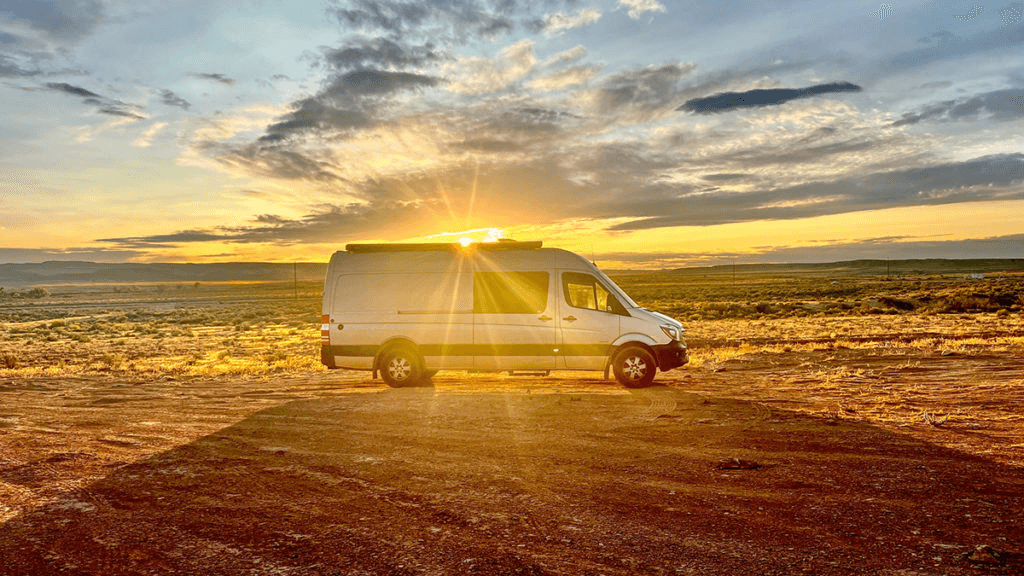
Photo by [Stephen and Andie](https://www.stephenandandie.com). Licensed for editorial use.
Free Camping for Van Life: 50 Best Boondocking Spots in the USA
The first time we boondocked, we were nervous. We'd found a spot on BLM land outside of Kingman, Arizona, and just drove in hoping nobody would tell us we couldn't be there. Nobody did. We spent three nights under a sky so clear it made us forget every city we'd ever lived in, and we didn't pay a single cent. That experience hooked us on free camping the way most people get hooked on caffeine.
Free camping for van life is not just possible in the United States. It's practically the default if you know where to look and how to follow the rules. This guide lists 50 boondocking spots across the country that real van lifers use, organized by region, with details on terrain, cell service, stay limits, and what to actually expect when you pull in.
What Is Boondocking?
Boondocking means camping for free on public land without hookups, amenities, or sometimes even a paved road to get there. The term originally came from the Tagalog word "bundok" meaning mountain, and it stuck because most free camping does happen in remote, mountainous, or desert terrain.
In the US, boondocking happens primarily on Bureau of Land Management land and National Forest land. Both are federal public lands where dispersed camping is allowed unless specifically posted otherwise. The standard rule is a 14-day maximum stay at one site within a 28-day period on BLM land. National Forest rules vary by forest, but 14 days is the typical limit there too.
Leave No Trace principles aren't just good manners when boondocking. They're survival. The reason we have free camping at all is because land managers trust users to not trash the place. When they find toilet paper scattered across a dispersed campsite, they close the area. We've seen it happen. Pack it in, pack it out, and use established sites when they exist.
50 Best Free Camping Spots
Southwest (15 Spots)
1. Dolan Springs, AZ (BLM land near Kingman) Wide-open desert camping with zero restrictions beyond the 14-day limit. Cell service from AT&T is decent. Flat terrain, room to spread out. This is where we had our first boondocking experience and it set the bar high.
2. Highway 389 Corridor, AZ (near Fredonia) Dispersed camping along the highway with views of the Vermilion Cliffs. Close to the North Rim entrance of Grand Canyon. Popular with van lifers heading to Bryce Canyon who want a free night or two on the way.
3. Tucson Mountain Park, AZ Saguaro cactus forest camping just west of Tucson. Some areas allow dispersed camping. The desert floor is packed and level, perfect for vans. Watch for summer heat. Tucson has enough amenities for resupply without feeling like a city.
4. Bureau of Land Management near Silver City, NM Gila National Forest and surrounding BLM land offer some of the least crowded free camping in the country. Mountain terrain, pine forests, and streams. Cell service is spotty but Verizon has coverage in some valleys.
5. Taos Junction BLM, NM A well-known boondocking area near the Rio Grande Gorge. Flat, wide-open high desert at 7,000 feet elevation. Summer nights are cool even when days are warm. Good Verizon signal in most areas.
6. Lake Mead NRA Dispersed Areas, NV Bitter Spring and other BLM pockets around Lake Mead offer free camping with lake views. The paid areas at Lake Mead are pricey, but the surrounding public land is free. Bring all your water.
7. Valley of Fire Perimeter, NV The park itself charges $10 per vehicle, but BLM land along the eastern and northern boundaries is free with the same red-rock scenery. Popular with photographers and van lifers heading between Las Vegas and Utah.
8. Kaibab National Forest, AZ (near Jacob Lake) North Rim area with pine forest camping. Free dispersed sites along forest roads. Close to the Arizona-Utah border and a natural stopping point between the Grand Canyon and southern Utah's national parks.
9. Apache-Sitgreaves National Forest, AZ Elevation around 8,000 feet near Alpine, AZ. Cool summer camping, pine forests, and actual streams. One of Arizona's best-kept secrets for mountain boondocking.
10. San Rafael Swell, UT Wild, rugged public land in central Utah. Free camping almost everywhere. The terrain is dramatic, the solitude is absolute, and there's essentially no one around. Cell service is nonexistent in most of it. Come prepared.
11. Capitol Reef National Forest, UT Dispersed camping on Dixie National Forest land near Capitol Reef. Pinyon-juniper woodland with views of the Waterpocket Fold. Quiet, free, and a perfect basecamp for exploring the park without paying for a campground.
12. Moab BLM Long-Term Visitor Area, UT The Moab area has designated Long-Term Visitor Areas where you can stay up to seven months for free between September and April. This is where the full-time van life community winters. It's social, it's free, and it's a great place to meet other nomads.
13. Carson National Forest, NM Mountain camping near Taos at elevation. Free dispersed sites along Forest Road 101 and surrounding roads. Aspen groves turn gold in September. It's hard to beat autumn camping here for free.
14. Imperial Sand Dunes perimeter, CA BLM land around the dunes near the Mexican border. Free camping in the desert with the dunes visible. Winter months are the sweet spot. Summer temperatures are genuinely dangerous.
15. Quartzsite BLM, AZ The winter gathering spot for the rubber-tramp community. Free long-term camping from September through April. RTR (Rubber Tramp Rendezvous) events happen here every January. It's a scene unlike anywhere else.
West (12 Spots)
16. Diablo Lake area, WA The Mount Baker-Snoqualmie National Forest around Diablo Lake has free dispersed camping sites with jaw-dropping views of the turquoise lake and Cascade peaks. The road in is paved but narrow. Summer only.
17. Rattlesnake Lake dispersal areas, WA Beyond the paid campground at Rattlesnake Lake, the surrounding Snoqualmie National Forest has free sites. Close to Seattle for city amenities but feeling worlds away.
18. Lassen National Forest, CA Free camping east of Lassen Volcanic National Park. Pine forests, meadows, and hot springs nearby. Good Verizon and AT&T coverage at lower elevations. Summer and early fall are the windows.
19. Inyo National Forest, CA (near Bishop) Dispersed camping along Highway 395 with Eastern Sierra views. The Owens Valley has dozens of free pull-offs with mountain scenery. Close to Bishop for groceries and laundry. One of California's best free camping areas.
20. Modoc National Forest, CA Far northeast California, rarely crowded. Volcanic terrain, pine forests, and actual solitude. Free dispersed camping almost everywhere. It's a long drive from anywhere, which is the point.
21. Wallowa-Whitman National Forest, OR Eastern Oregon's largest national forest with free camping in alpine meadows and along the Eagle Cap Wilderness boundary. Summer and early fall only. The scenery rivals Glacier National Park with a fraction of the visitors.
22. Sawtooth National Forest, ID Central Idaho with jagged peaks and alpine lakes. Free dispersed camping along dozens of forest roads. Sawtooth is one of those places that makes you understand why people moved West.
23. Payette National Forest, ID Central Idaho with a mix of river valleys and mountain terrain. Free camping along the Salmon River and in the forest high country. Fishing is excellent and the camping is free. Hard to argue with that.
24. Bridger-Teton National Forest, WY Surrounds Grand Teton and helps connect to Yellowstone. Free dispersed camping with views of the Tetons from the east side. Winter access is limited but summer camping is spectacular.
25. Medicine Bow-Routt National Forest, WY Southeast Wyoming with free camping in the Snowy Range. High altitude, thin air, and incredible stargazing. The Snowy Range Scenic Byway has multiple free pull-off campsites.
26. Humboldt-Toiyabe National Forest, NV Nevada's largest national forest with free camping near the Sierra Nevada crest. Loyalton and Bridgeport areas have good dispersed sites with cell service. A hidden gem for avoiding the California price tag while staying close to the Sierra.
27. Ochoco National Forest, OR Central Oregon near Prineville. Juniper and ponderosa pine forest with free camping. Close to the Smith Rock climbing area. Quiet, uncrowded, and surprisingly green for Oregon's high desert country.
Southeast (10 Spots)
28. Ocala National Forest, FL Central Florida's sand pine scrub and springs. Free dispersed camping in the forest interior. Fort De Soto Park is a great paid alternative nearby with beach camping at $26 a night, but Ocala gives you free forest camping if you want to save.
29. Chattahoochee-Oconee National Forest, GA North Georgia mountains with free dispersed camping. The Appalachian Trail runs through here. Free camping near Amicalola Falls and along Forest Road 42. Atlanta is close enough for resupply but the forest feels remote.
30. Nantahala National Forest, NC Western North Carolina with free camping along the Nantahala River and in the mountains bordering the Great Smoky Mountains. This is one of the best free camping areas in the Southeast, with river access, mountain views, and proximity to the Blue Ridge Parkway.
31. Pisgah National Forest, NC Adjacent to Nantahala and equally good. Free dispersed camping near Looking Glass Rock, the Linville Gorge, and along the Pisgah Highway. Cell service is decent near roads. This area is a van lifer favorite in the Southeast.
32. George Washington-Jefferson National Forest, VA Southwest Virginia with free camping along the Blue Ridge and in the Mount Rogers area. The Appalachian Trail runs through the forest. Quiet, forested, and genuinely beautiful without the Shenandoah crowds.
33. Sumter National Forest, SC Upstate South Carolina with free camping near the Chattooga River. The forest is hilly and forested with good swimming holes. Not as well-known as the NC forests, which means fewer people and more solitude.
34. Daniel Boone National Forest, KY Eastern Kentucky with sandstone cliffs, natural arches, and free camping along the Sheltowee Trace Trail. Red River Gorge is a highlight. Cell service is limited in the deeper hollows.
35. Cherokee National Forest, TN Eastern Tennessee stretching along the North Carolina border. Free dispersed camping near the Cherohala Skyway and along the Ocoee River. The Smoky Mountains are free to enter and this forest is their gateway.
36. Bienville National Forest, MS Southern Mississippi pine forest with free camping. Not mountain scenery, but warm winter camping in the South with nobody around. Good for van lifers avoiding northern winters who don't want to go as far as Florida or Texas.
37. Ouachita National Forest, AR The only national forest in Arkansas, and it's loaded with free dispersed camping along the Ouachita Mountains. Hot Springs is nearby for resupply and a soak. The Ouachita National Recreation Trail runs through the heart of it.
Northeast (8 Spots)
38. White Mountain National Forest, NH Free dispersed camping is limited but exists on forest roads outside the paid campgrounds. The Pemigewasset Wilderness boundary areas have pull-offs. Cell service is good near the main roads. The scenery is New England at its best.
39. Green Mountain National Forest, VT Vermont's national forest with free camping along Long Trail and forest roads. The Appalachian Gap and Rochester areas have dispersed sites. Fall foliage season makes this worth the trip even if paid campgrounds fill up.
40. Allegheny National Forest, PA Pennsylvania's only national forest. Free dispersed camping in the forest interior. The reservoir areas are popular for kayaking. It's not the most dramatic scenery in the country, but it's free and uncrowded.
41. Monongahela National Forest, WV West Virginia's high country with free camping near the Dolly Sods and Cranberry Wilderness. The elevation creates cool summer temperatures and spectacular fall color. Cell service is limited but improving.
42. Adirondack Forest Preserve, NY Not technically a national forest but New York State land where free primitive camping is allowed at least 150 feet from roads and water. The Adirondacks are massive and much of the interior is roadless wilderness. Great for those willing to hike in.
43. Catskill Forest Preserve, NY Similar rules to the Adirondacks. Free primitive camping on state land. The Catskills are closer to NYC than the Adirondacks, which makes them accessible for weekend boondocking from the city.
44. Superior National Forest, MN Boundary Waters country with free dispersed camping outside the permit-required wilderness area. The northern portions of the forest are remote and beautiful. Summer only for most van lifers. Mosquitoes are legendary.
45. Hiawatha National Forest, MI Upper Michigan with free camping along Lake Michigan and Lake Superior shores. The forest is split into two units. The eastern unit near the Upper Peninsula's northern coast has dramatic shoreline camping for free.
Midwest (5 Spots)
46. Mark Twain National Forest, MO Southern Missouri's Ozark country with free dispersed camping along the Current River and Jacks Fork River. The Ozark trails run through here. Cheap, beautiful, and genuinely underappreciated.
47. Hoosier National Forest, IN Southern Indiana with free camping in the hills and along the Ohio River. It's Indiana's only national forest and it's a fraction of the size of western forests, but the free camping is real and the hiking is solid.
48. Wayne National Forest, OH Southeastern Ohio's hilly forest with free dispersed camping. It's Ohio's only national forest. The terrain is surprisingly rugged for the Midwest. Close to Athens and the Hocking Hills area for resupply.
49. Chequamegon-Nicolet National Forest, WI Northern Wisconsin with free camping among lakes and pine forests. The Namekagon River area is beautiful. Summer and early fall are the windows. Wisconsin's northwoods are a legitimate free camping resource.
50. Shawnee National Forest, IL Southern Illinois with free camping near the Garden of the Rocks and along the Ohio River. The "Little Egypt" region is a surprise to people who think Illinois is all flat farmland. Free, forested, and quiet.
How to Find Free Campsites Near You
Calculate how much your route will actually cost
Try the Cost CalculatorFree · Based on 2026 real data · All 50 states
Free · 2026 data · All 50 states
The 50 spots above are a starting point. But the real skill is learning to find free campsites on your own, wherever you happen to be.
iOverlander is the single most useful app for this. It's community-driven, free, and works offline once you download the data. Users pin locations with details about terrain, cell service, noise level, and whether they've been hassled by anyone. We check it every time we enter a new area.
FreeRoam (freero.am) is a web-based tool specifically designed for dispersed camping. It shows BLM and National Forest boundaries overlaid on a map, plus user-submitted campsite locations. The interface is clean and it's faster than digging through government maps.
BLM and USFS Motor Vehicle Use Maps are the official source. Every National Forest publishes MVUMs that show which roads are open to dispersed camping. They're available free at forest service offices and online. Download the PDF for the forest you're visiting and study it before you go.
Avenza Maps lets you download USFS and BLM maps as georeferenced PDFs that work offline on your phone. The official maps cost nothing and show land boundaries clearly. We use these to confirm we're actually on public land before setting up camp.
Boondocking Safety & Preparation
Free camping is not without risks, and pretending otherwise would be irresponsible.
Cell service is the big one. Before heading into a boondocking area, check coverage maps for your carrier. AT&T tends to have the best rural coverage in the West. Verizon is strong in the Mountain states. T-Mobile has improved but still has gaps in remote areas. We carry a Verizon and AT&T SIM so we always have at least one network. For truly remote trips, a Garmin inReach Mini is worth the $15 monthly subscription for the SOS function alone.
Water is non-negotiable. We carry a minimum of 5 gallons per person for a 3-day boondocking trip. That's for drinking, cooking, and basic hygiene. If you're in the desert, double it. Dehydration in the Southwest kills people every year, and it happens fast.
Have an exit plan. Know how to get out of your boondocking site in darkness, in rain, and if your vehicle won't start. We always walk the road in when we arrive during daylight so we know what we're dealing with. Getting stuck in mud or sand at a free campsite turns a great experience into an expensive tow.
Tell someone where you're going. Leave your coordinates with a friend or family member before heading into areas without cell service. If something goes wrong and you don't check in, someone needs to know roughly where to look.
Essential Gear for Free Camping
You don't need a $30,000 build to boondock comfortably, but you do need certain basics.
Solar power. A 200W panel and a 100Ah lithium battery will keep your phone charged, run LED lights, and power a small fridge for days. We go into this in much more detail in our solar panel guide, but for free camping, solar is what makes it sustainable.
Portable toilet. A Laveo dry flush toilet or a simple bucket toilet with wag bags. For extended boondocking, this makes the difference between staying three days and staying two because you can't hold it anymore.
Offline navigation. Downloaded maps on your phone or a dedicated GPS unit. The Garmin Oregon series or even a phone with Avenza Maps works. When you're on forest roads that aren't on Google Maps, you need something that works without cell service.
Recovery gear. At minimum, a shovel, traction boards (Maxtrax or similar), and a tow strap. If you're solo boondocking in remote areas, these items can save you a $500 tow bill or worse.
Water filtration. A Sawyer Squeeze or Grayl filter lets you refill from natural water sources. It's not a substitute for carrying your own water, but it's a valuable backup. Also worth noting: understanding dispersed camping rules on public land before heading out.
Plan your savings. Free camping is the single biggest budget lever in van life — eliminating $400–$800/month in campground fees. See how much you'll actually save with our free van life cost calculator, which breaks down total monthly costs by state including fuel, insurance, and camping fees.
FAQ
Is boondocking really free?
Yes, boondocking on BLM and National Forest land is genuinely free. No permits are required for standard dispersed camping stays of 14 days or less. Some areas have developed free sites with fire rings and picnic tables that are maintained by the Forest Service. The only costs are getting there and bringing your own supplies.
How long can I stay at a free boondocking site?
On BLM land, the standard limit is 14 consecutive days within a 28-day period at one site. After 14 days, you must move at least 25 miles away. National Forest limits vary but most follow the same 14-day rule. Long-Term Visitor Areas in Arizona allow up to 7 months during the winter season.
What's the difference between boondocking and dispersed camping?
Practically nothing. Boondocking is the colloquial term used by RV and van life communities. Dispersed camping is the official term used by the Forest Service and BLM. Both mean camping for free on public land without amenities. Some people use "boondocking" to specifically mean camping without any hookups, even at a paid site, but in common usage they're interchangeable.
Can I boondock in any National Forest?
Almost any National Forest allows dispersed camping unless specifically posted otherwise. Check the Motor Vehicle Use Map for the specific forest to see where dispersed camping is permitted. Some forests restrict it to certain roads or zones, especially near wilderness areas or wildlife habitat.
What do I do about bathrooms when boondocking?
For solid human waste, dig a cathole 6 to 8 inches deep and at least 200 feet from water sources. Cover it when done. For toilet paper, pack it out in a sealed bag. Many experienced boondockers use a portable cassette toilet or bucket system to avoid digging. Wag bags are required in some sensitive environments like above timberline or in canyon country.
Plan Your Van Life Budget
Use our free calculator to estimate van life costs by state, based on real 2026 data.
Try the Cost Calculator