Van Life Winter Survival Tips (2026)
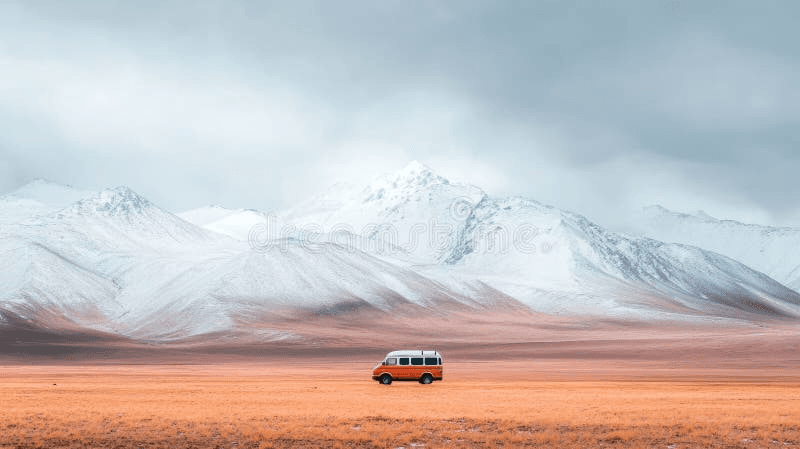
Photo by [Dreamstime](https://www.dreamstime.com). Licensed under [Dreamstime License](https://www.dreamstime.com/terms).
Van Life Winter Survival Tips & Best Destinations
Our water lines froze at 18 degrees in a campground outside Flagstaff. We woke up at 3 AM to the sound of something cracking inside the wall. It was the PEX fitting near the water pump. The repair took two hours in freezing temperatures with numb fingers and a hair dryer we borrowed from the campground host. That was the night we decided to take winter van life seriously, and the following year we did it right.
Van life winter tips aren't just about staying warm. They're about keeping your systems functioning, your battery charged, your water flowing, and your sanity intact when the sun sets at 4:30 PM and you're confined to 60 square feet for 16 hours. Some people thrive in winter van life. Others head south and deal with summer again. Both strategies work. This guide covers both.
Winter Van Life Challenges
Let's name the problems before we solve them.
Condensation. This is the problem nobody warns you about until it's dripping on your face at 4 AM. When the inside of your van is warm and humid from breathing, cooking, and boiling water, and the outside is freezing, moisture condenses on every cold surface. The walls, ceiling, windows, and metal frame all collect water. Over a cold week, this adds up to liters of moisture that drips, pools, and promotes mold. We had mildew forming on our ceiling paneling within three weeks of our first cold snap before we addressed it properly.
Battery efficiency. Lithium batteries lose capacity in cold temperatures. At 20 degrees Fahrenheit, a LiFePO4 battery delivers about 70 percent of its rated capacity. Below 0 degrees, it drops further and charging below freezing can damage the cells. AGM batteries handle cold slightly better but also lose capacity. Your solar panels produce less in winter due to shorter days and lower sun angle. The combination means your power system is working harder and delivering less.
Frozen plumbing. Water expands when it freezes. Pipes burst. PEX fittings crack. Water pump diaphragms split. We've seen all three in other people's vans. The fix is either keeping your plumbing above freezing with heat, or winterizing it by draining the system entirely when temperatures drop.
Shorter days and less solar. In December at 40 degrees north latitude, you get about 9.5 hours of daylight with maybe 4 peak sun hours. Compare that to 15 hours and 7 peak sun hours in June. Your 200W solar system that easily powers everything in summer is producing less than half in winter. This is the single biggest factor that forces van lifers south or onto shore power.
How to Keep Your Van Warm in Winter
The heating question is the first one every new winter van lifer asks, and the answer depends on your power situation.
Diesel heaters are the gold standard. A Chinese-sourced 2KW diesel heater (the kind you find on Amazon for $150 to $200, often branded as VEVOR, Happybuy, or similar) pulls about 15 watts on the fan and 0.3 liters of diesel per hour on low. That's roughly 0.5 gallons of diesel per night. At $4 a gallon, you're spending $2 a night to keep your van at 65 degrees. The same heat from propane would cost about $4 to $6 per night. Diesel heaters also don't consume oxygen inside the van because they vent exhaust outside, which makes them safer for enclosed spaces.
The installation involves mounting the unit under your van or inside a cabinet, running the exhaust through the floor, connecting fuel lines to your diesel tank (or a separate jerry can for gas vans), and wiring it to your battery. The whole job takes about 4 hours for a first-timer.
Propane heaters like the Mr. Heater Buddy are a solid backup and work well for people who don't have diesel. The Buddy heater uses 1-pound propane cylinders or hooks up to a 20-pound tank. It's effective but consumes oxygen and produces moisture, so you need to crack a window for ventilation. That cracked window lets cold air in, which partially defeats the purpose. It works, but it's not as efficient as diesel.
Insulation matters more than heat. You can run a heater all night, but if your van has no insulation, you're heating the outside air. We insulated with Havelock wool (sheep's wool insulation) which has an R-value of about 3.6 per inch. We put 3 inches in the walls and ceiling, giving us roughly R-11. The temperature difference between our insulated van and a friend's uninsulated van was 25 degrees on a 20-degree night with the same heater running at the same setting.
The insulation materials we've seen perform well include Havelock wool (our choice, handles moisture naturally), Thinsulate (good R-value per inch but expensive), and rigid foam board (cheap and effective but leaves gaps at the ribs if not carefully installed). Spray foam gives the best seal but is a permanent installation with no ability to inspect or repair the metal behind it.
Skirting is the last frontier for extreme cold. If you're parked in one spot for extended periods in sub-zero temperatures, skirting around the base of your van blocks wind from getting under the vehicle. This alone can raise your undercarriage temperature by 10 to 15 degrees, which helps prevent frozen pipes and keeps your battery warmer. We made skirting from Reflectix and bungee cords for about $30. It's ugly but effective.
Best Winter Van Life Destinations
How much would van life cost you? Check your state
Try the Cost CalculatorFree · Based on 2026 real data · All 50 states
Free · 2026 data · All 50 states
Some of us head south. There's no shame in it. Here are the best winter van life destinations based on temperature, free camping availability, and community.
Southern Arizona. The Tucson-to-Nogales corridor is the epicenter of winter van life. BLM land around Tucson offers unlimited free camping with daytime highs in the 60s and 70s. Patagonia Lake State Park is a great paid option at $20 per night if you want lake access. The Quartzsite BLM area to the west hosts thousands of winter van lifers from September through April with free long-term camping.
South Florida. Fort De Soto Park is one of the best beach camping spots in the country at $26 per night, and winter temperatures are consistently comfortable. The surrounding area has BLM and state park options for every budget. The Florida Keys are pricier but the free camping in the Big Cypress National Preserve is a hidden gem.
South Texas. The Hill Country around Austin has mild winters and cheap camping. Enchanted Rock State Natural Area is $10 per person per day and the granite dome is pleasant to climb in winter when summer temperatures make it unbearable. Big Bend National Park is remote and spectacular in winter.
Southern California. The desert areas around Joshua Tree and the Salton Sea have free BLM camping with warm winter days. The Bureau of Land Management land east of Indio and around Brawley is a major winter gathering spot for van lifers. The California desert camping scene is massive from November through March.
New Mexico. The southern half of the state, particularly around Las Cruces and the Gila National Forest, offers free camping with mild winter temperatures. The Gila Wilderness is stunning in winter with minimal crowds and snow only at the highest elevations.
Winter Driving Safety for Vans
A loaded van handles differently than an empty one, and winter roads make those differences more dangerous.
Tires matter. If you're driving in snow or ice, all-season tires are not enough. Dedicated winter tires (we run General AltiMAX Arctics) make a dramatic difference in stopping distance and cornering grip. For rear-wheel drive vans like the Sprinter, winter tires are non-negotiable in snow country. Front-wheel drive vans handle better in snow by default, but winter tires still help.
Carry chains. In mountain passes, chain requirements are enforced by state patrol. Even if you have 4WD, you may be required to carry and sometimes install chains. Washington, Oregon, and California all enforce chain controls on mountain highways during storms. A set of cable chains for your van's tire size costs $80 to $150 and practicing installation at home in your driveway is a lot better than figuring it out in a snowstorm at 6,000 feet.
Weather apps are essential. We check three weather sources before driving in winter conditions: Weather Underground for local detail, NOAA for official forecasts and warnings, and the state DOT's road condition website for real-time highway status. If a road is closed or under a travel advisory, turn around. No schedule is worth a van in a ditch.
Reduce speed and increase following distance. A loaded van needs more distance to stop than a passenger car, especially on wet or icy roads. Double your normal following distance in winter conditions. Brake gently and early. If your van has a manual transmission, use engine braking in downhills to avoid riding the brakes on icy roads.
Winter Van Life Budget Impact
Winter costs more than summer van life. Here's what we've seen:
| Expense | Summer | Winter | Increase |
|---|---|---|---|
| Fuel (heating) | $0 | $60/month (diesel) | +$60 |
| Propane | $20/month | $40/month | +$20 |
| Campground fees | $120/month | $200/month (more paid sites) | +$80 |
| Solar production | Full | 40-50% reduction | Need shore power or generator |
| Fuel (driving) | $320/month | $380/month (longer warm-up, more drag) | +$60 |
| Total increase | ~$220/month |
The biggest hidden cost is the reduced solar production. If your summer boondocking routine relied on solar for everything, winter will force you into paid campgrounds with hookups or require a generator. A Honda EU2200i generator ($1,200) runs about $2 per hour on gasoline and can recharge your battery in 3 to 4 hours. It's loud, so run it during the day away from other campers.
Planning your winter route? Calculate your total seasonal costs — including heating fuel, extra campground fees, and reduced solar expenses — with our van life cost calculator to see how winter impacts your monthly budget by state.
The Colorado campgrounds are beautiful in winter but the solar production at elevation is significantly reduced due to shorter days and frequent cloud cover. The Black Hills area is stunning but winter temperatures regularly drop below zero, which demands a serious heating setup. Both are doable in winter with the right preparation.
FAQ
How cold is too cold for van life?
Most experienced winter van lifers are comfortable down to about 0 degrees Fahrenheit with proper insulation and a diesel heater. Below that, water systems become difficult to manage, batteries lose significant capacity, and the diesel heater runs constantly. If temperatures are regularly below -10 degrees, heading south is the pragmatic choice.
How do I prevent condensation in my van during winter?
Ventilation is the key. Run a MaxxAir fan on low with the rain cover, crack a window with a screen, and use a small dehumidifier if you have shore power. Never dry clothes inside the van. Minimize indoor cooking or use a stove with an exterior vent. Good insulation also reduces condensation because interior surfaces stay warmer and don't collect moisture as readily.
Can I use my van's alternator to charge my house battery in winter?
Yes, and in winter it's one of the most reliable charging methods since solar is reduced. A DC-DC charger between your alternator and house battery can deliver 20 to 40 amps while driving. An hour of driving puts 20 to 40 amp-hours back in your battery. This is how we supplement solar on overcast winter days.
What's the cheapest way to heat a van in winter?
A Chinese-sourced 2KW diesel heater at $150 to $200 is the cheapest option per BTU. The fuel cost is about $2 per night on diesel. Propane heaters are the next cheapest but less efficient and add moisture. Electric heaters are only viable with shore power or a massive battery bank. Wood stoves work but require a chimney installation and constant attention.
Do I need to winterize my van's plumbing?
If you're regularly below freezing, yes. Either drain your water system completely when not in use, insulate your pipes with foam sleeves, run a small heater near your plumbing, or use RV antifreeze in your drains and traps. Frozen and burst plumbing is the single most expensive winter problem van lifers face, and it's entirely preventable.
Plan Your Van Life Budget
Use our free calculator to estimate van life costs by state, based on real 2026 data.
Try the Cost Calculator