Van Life with Dogs: Tips for Traveling with Pets
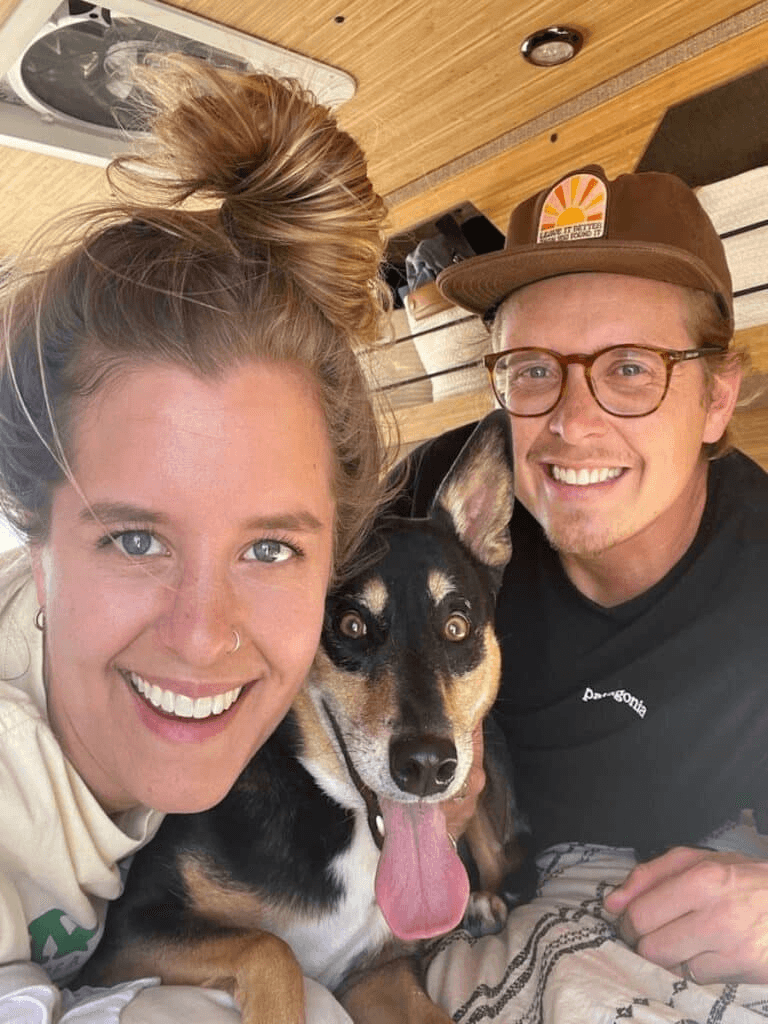
Photo by [The Wayward Home](https://www.thewaywardhome.com). Licensed for editorial use.
Van Life with Dogs: Tips for Traveling with Pets
Our border collie mix, Scout, has slept in more different locations than most people will visit in their entire lives. She's dozed on the beach at Fort De Soto Park, chased lizards through the desert outside Tucson, and curled up next to us at 10,000 feet in the Colorado mountains. She loves the van. But it took us a while to figure out what she actually needed versus what we assumed she needed.
Van life with dogs is wonderful, but it's not as simple as throwing a leash in the back and hitting the road. Dogs have temperature sensitivities, space requirements, and health considerations that become a lot more complicated when your bedroom is also your kitchen and your office. Here's what we've learned after two years and roughly 38,000 miles with a dog in the van.
Is Van Life Good for Dogs?
The answer depends on the dog. Some breeds thrive on the road. Others would rather have a backyard and a routine.
Dogs that tend to do well with van life are active, adaptable breeds that bond closely with their people. Border collies, Australian shepherds, vizslas, and mixed breeds with similar energy profiles love having a job to do and new places to explore. Labrador retrievers are famously easygoing and usually adapt to any living situation as long as they get their walks. Smaller breeds like cavalier King Charles spaniels and pugs can work too, though their exercise needs are lower and their temperature tolerance requires more attention.
Breeds that struggle more include those bred for cold climates in warm climates and vice versa. Huskies in Arizona are miserable. Bulldogs and pugs overheat dangerously fast in summer, which is a real problem when your van can reach 120 degrees in direct sunlight. Dogs with severe anxiety or those that panic in confined spaces will not enjoy being in a van, no matter how much you love the lifestyle.
We'll be direct: if your dog hates car rides, van life is going to be rough. A dog that whines and paces for the entire drive is not going to settle down when the engine turns off. They'll be stressed in the van, which means you'll be stressed, which defeats the purpose. Be honest about your dog's temperament before committing to this.
Best Dog-Friendly Van Life Routes
Not all routes are created equal when you're traveling with a dog. Here are some that work particularly well.
The Arizona-to-Utah corridor is hard to beat for dog-friendly van life. The desert has wide-open spaces where dogs can run safely, the weather is comfortable for most of the year, and both BLM and National Forest land allow off-leash exploration (where local regulations permit). Patagonia Lake State Park allows dogs on leash throughout the park, and the lake itself is great for dogs that love to swim. The surrounding BLM land offers unlimited off-leash hiking terrain.
The Black Hills region in South Dakota is another excellent option. Black Hills National Forest has hundreds of miles of dog-friendly trails, cool summer temperatures, and wildlife that will keep your dog entertained (from a safe distance). The area is loaded with free dispersed camping, which means your dog has room to roam without being stuck at a crowded paid campground.
The Pacific Northwest works well in summer and early fall. Diablo Lake in the North Cascades has trails that are spectacular for dogs that handle elevation. The water is cold enough to be refreshing without being dangerous. Rattlesnake Lake near Seattle is a more accessible option with easy trails and a dog-friendly swimming beach.
The Blue Ridge Parkway and surrounding National Forests in North Carolina make a great eastern route for dogs. The Pisgah and Nantahala National Forests have abundant trails, cool mountain air, and water features that dogs love. The moderate climate means you don't have to worry about extreme heat for most of the year.
Keeping Your Dog Safe & Comfortable in a Van
How much would van life cost you? Check your state
Try the Cost CalculatorFree · Based on 2026 real data · All 50 states
Free · 2026 data · All 50 states
This is the section where people need to listen carefully, because mistakes here can kill your dog.
Never leave your dog in a parked van in warm weather without active climate control. This is not a suggestion. A van in direct sunlight at 80 degrees outside reaches 120 degrees inside within 30 minutes. At 90 degrees outside, it can hit 140 degrees. Dogs can suffer heatstroke and die in these conditions. If you don't have a MaxxAir fan with a thermostat and sufficient solar power to keep it running all day, do not leave your dog unattended in warm weather. Period.
We run a MaxxAir Deluxe II fan on a thermostat set to 75 degrees. With our 200W solar system and 100Ah lithium battery, it runs all day without issue. We also crack two windows with bug screens. On days above 90 degrees, we take Scout with us or leave her at a dog-friendly business if one is available. No exception.
Insulation helps more than you'd think. Our van has Havelock wool insulation in the walls and ceiling. It keeps the interior 15 to 20 degrees cooler than an uninsulated van in direct sun. It also keeps it warmer in winter. If your van is uninsulated, the temperature swings are dramatic and uncomfortable for a dog that can't regulate its body temperature as efficiently as you can.
Create a designated dog space. Scout has a spot on the platform bed with a non-slip mat and a water bowl that mounts to the wall. She knows it's her area and she settles there when we're driving. Having a defined space reduces anxiety for most dogs and prevents them from getting underfoot while you're cooking or moving around.
Ventilation while sleeping. We run the MaxxAir fan on low all night with the roof slightly cracked. This keeps fresh air circulating and prevents condensation buildup. Dogs are sensitive to air quality too, and a stuffy van at 3 AM is uncomfortable for everyone.
Veterinary Care on the Road
Your regular vet back home is great, but they're 2,000 miles away when your dog eats something weird in New Mexico.
Find vet clinics along your route before you need them. We use Google Maps to search for veterinary clinics in the towns we're passing through and save the addresses and phone numbers. It takes five minutes and saves you from panicking when something happens at 9 PM in a town you've never heard of.
Carry a pet first aid kit. Your kit should include: gauze wraps, self-adhering bandage tape, hydrogen peroxide (for inducing vomiting only if a vet tells you to), tweezers for tick and thorn removal, styptic powder for nail bleeding, and Benadryl (dosage is 1 mg per pound of body weight, but confirm with your vet first). We keep ours in a waterproof bag near the dog's supplies.
Pet insurance is worth considering for full-time van lifers. We pay $35 a month for Trupanion coverage on Scout. It covers accidents and illnesses, which is the stuff that actually causes expensive vet bills. A foreign body removal surgery runs $2,000 to $4,000. An emergency vet visit for a snake bite or bee sting reaction runs $500 to $1,500. The insurance pays for itself after one significant claim.
Keep vaccination records on your phone and in your glove box. Different states have different rabies vaccination requirements, and some campgrounds ask for proof of current vaccinations. A digital copy on your phone plus a printed copy covers both situations.
Dog-Friendly Campgrounds & Boondocking
Not all campgrounds allow dogs, and not all dog-friendly campgrounds are actually good for dogs. Here's what we look for.
National Forest and BLM dispersed camping is almost always dog-friendly with no leash requirements (though keeping your dog under control is both ethical and often legally required). This is our default option because it gives dogs the most freedom.
State parks are usually dog-friendly on leash. Some have designated dog trails. Others restrict dogs to paved areas only. Check the specific park's pet policy before arriving. Enchanted Rock State Natural Area allows dogs on leash throughout the park, and the granite dome is a fun scramble for athletic dogs.
KOA campgrounds and most private campgrounds allow dogs but often have breed restrictions. Pit bull-type breeds, Rottweilers, and German Shepherds are commonly on the restricted list at private campgrounds, even if they're the sweetest dogs alive. National Park Service campgrounds generally allow dogs on leash but restrict them from most trails and backcountry areas.
When boondocking with a dog, the biggest consideration is wildlife. We've had Scout chase jackrabbits, stare down rattlesnakes, and try to befriend a porcupine (that was a tense five minutes). Know what wildlife is in the area and keep your dog close in rattlesnake country. A snake bite on a remote boondocking trip is a stressful emergency that could be avoidable with basic precautions.
For the best dog-friendly camping, Bryce Canyon has a campground that allows dogs, and the surrounding Dixie National Forest gives you unlimited free off-leash exploration on BLM land just outside the park boundary. It's the best of both worlds for you and your dog. The California state page also has useful listings for dog-friendly campgrounds along the coast, where many beaches have designated off-leash areas for dogs in the morning hours.
Traveling with Dogs Across State Lines
Each state has its own animal entry requirements, and most van lifers don't realize this until they're pulled over or checking into a campground.
Most states require a current rabies vaccination for dogs entering the state. Some require a health certificate from a veterinarian issued within 30 days. Hawaii has a mandatory quarantine period that makes bringing a dog there impractical for most van lifers. Alaska requires a rabies vaccination but no quarantine.
We keep a folder in the glove box with Scout's rabies certificate, vaccination records, and a letter from our home vet confirming she's healthy and current on all vaccines. This folder has gotten us through campground check-ins and one very polite but thorough animal control interaction in Georgia. Five minutes of preparation saves hours of hassle.
If you're crossing international borders with your dog (Canada or Mexico), the requirements are more involved. Canada requires a valid rabies certificate. Mexico requires a health certificate issued within 10 days of entry. Both borders will turn you away if you don't have the paperwork, and your dog may face quarantine. Plan ahead and call the border crossing before you show up.
Some campgrounds and rest areas require dogs to be on a leash no longer than six feet. Retractable leashes that extend to 20 or 30 feet technically violate these rules even when retracted. We carry a standard 6-foot nylon leash for campground use and a longer line for open areas where it's permitted.
FAQ
Can I leave my dog alone in the van?
It depends on the weather and your setup. In mild weather (under 70 degrees outside) with ventilation and water available, short periods are fine. In warm weather, only leave your dog if you have a powered fan running on a thermostat with sufficient solar or battery capacity. In any weather above 80 degrees outside, the risk of heatstroke is real. When in doubt, take the dog with you.
What's the best dog breed for van life?
Medium-sized, active, adaptable breeds tend to do best. Australian shepherds, border collies, vizslas, and labrador retrievers are popular among van lifers. The best breed is the one that matches your activity level, climate, and space. A high-energy dog needs more exercise. A short-nosed breed needs more temperature management. Think about your actual lifestyle, not the dog you wish you had.
How do I handle dog waste while boondocking?
Pack it out. Always. Dog waste doesn't decompose quickly and it contaminates water sources. Bring dedicated dog waste bags and a small sealed container for used bags until you can dispose of them properly. On extended boondocking trips, you may need to carry waste for several days. Plan for it.
Are there dog-friendly workamping positions?
Some workamping positions allow dogs and some don't. Ask specifically when applying. KOA campgrounds are generally pet-friendly. State park hosting positions vary. Amazon CamperForce positions in their warehouses typically don't allow dogs on-site, but some seasonal hosting positions at Corps of Engineers campgrounds do.
How do I keep my dog from getting bored in the van?
Exercise before confinement. A tired dog is a good van dog. Hiking, running, swimming, or fetch sessions before time in the van make a huge difference. We also use food puzzles and frozen kong toys to keep Scout occupied when we need to stay in the van for a few hours in mild weather. Rotate toys to keep them interesting. A dog that gets two hours of exercise and exploration per day will sleep contentedly in the van while you work or cook.
What do I do if my dog gets sick in a remote area?
Call the nearest emergency vet clinic, even if it's two hours away. Stabilize your dog with first aid and drive to the clinic. Most pet emergency clinics are in larger towns, which means a drive from remote boondocking areas. Having a plan and the nearest clinic's address saved in your phone before you need it is critical. ASPCA Poison Control (1-888-426-4435) is available 24/7 for $95 per incident and can guide you through emergency situations.
How do I deal with dog hair in a van?
You accept it. Seriously, dog hair in a van is inevitable. What you can do is brush your dog daily outside the van, use a handheld vacuum twice a week, and keep a lint roller near the door. We use a Shark cordless handheld vacuum that charges from our USB port and handles daily hair cleanup in about five minutes. Dark-colored interior surfaces show hair more, so if you're choosing interior paneling, lighter colors hide dog hair better.
Plan Your Van Life Budget
Use our free calculator to estimate van life costs by state, based on real 2026 data.
Try the Cost Calculator