Van Life on a Budget: Complete 2026 Guide
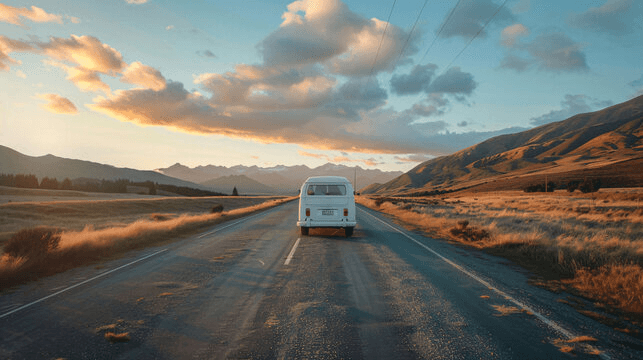
Photo by [Halfway Anywhere](https://www.halfwayanywhere.com). Licensed for editorial use.
Van Life on a Budget: Complete 2026 Guide
We spent our first month of van life terrified of checking our bank account. Every fill-up felt like a small betrayal. Every campground fee made us wince. We thought we'd figured out the money side before hitting the road, and we were dead wrong. The good news? After two years and roughly 38,000 miles, we've nailed down what actually works when you're trying to live in a van without going broke.
Van life on a budget is absolutely doable, but it requires honesty about your spending and a willingness to adapt. This guide breaks down every major expense category with real numbers from our own trips and from dozens of other van lifers we've talked to at campgrounds across the country.
How Much Does Van Life Actually Cost?
Let's cut through the Instagram fantasy. Here's what we spent in a typical month on the road in 2025, and what most budget-conscious van lifers we know are spending right now:
| Expense | Low End | Average | Comfortable |
|---|---|---|---|
| Fuel | $180 | $320 | $450 |
| Insurance (van + auto) | $95 | $140 | $200 |
| Camping fees | $0 | $120 | $300 |
| Food & groceries | $200 | $350 | $500 |
| Maintenance fund | $50 | $100 | $200 |
| Phone & internet | $35 | $60 | $90 |
| Propane | $15 | $30 | $50 |
| Miscellaneous | $50 | $100 | $200 |
| Total | $625 | $1,220 | $1,990 |
The "low end" column is what a solo traveler pulls when they're genuinely scrapping every dollar. The "average" is where most of us land. The "comfortable" row is for folks who don't want to feel like they're sacrificing much.
One thing we learned fast: your biggest variable isn't fuel or food. It's camping fees. The difference between someone who boondocks 80 percent of the time and someone who stays in paid campgrounds full-time is easily $400 to $600 a month. That's the lever you should pull first if you're trying to cut costs.
Insurance deserves a separate mention because it catches people off guard. We pays around $140 a month for full-timer coverage through Progressive. If you're still on a standard personal auto policy and living in your van, your insurer might deny a claim. It happened to a couple we met near Rattlesnake Lake, WA, and it's not pretty. Call your agent before you go full-time. Ask specifically about full-timer endorsements.
Want to see how all these costs add up for your specific situation? Use our free van life cost calculator to build a personalized monthly budget based on your state, vehicle, and travel style.
How to Build a Van on a Budget
The van conversion rabbit hole can swallow your savings faster than the van itself. We've seen people drop $40,000 on a DIY build that looks gorgeous but includes things they never actually use, like a composting toilet they were too squeamish about and an indoor shower that flooded the van twice.
Here's our philosophy: build in phases.
Phase one ($1,000 to $2,500): Insulation, a basic bed platform, and a way to keep food cold. That's it. We used rigid foam board from Home Depot for insulation, 2x4s for the frame, and a $60 ARB fridge that we bought used on Facebook Marketplace. We camped like that for three months.
Phase two ($1,500 to $3,000): Solar setup, a basic kitchen, and ventilation. By this point you know how you actually use the space and can plan around real habits.
Phase three ($2,000 to $5,000): Everything else. Shower setup (if you want one), extra storage, upgraded battery bank, maybe a ceiling fan.
The single biggest money saver in the entire build process is buying used materials. We got our hardwood paneling from a restaurant renovation on Craigslist for $80, and it looks better than the reclaimed wood people pay $300 for on Etsy. Habitat for Humanity ReStores are goldmines for hardware, windows, and leftover building supplies. Check them weekly. Inventory changes constantly.
One mistake we see constantly: people spend big on an expensive inverter or charge controller before investing in decent insulation. A $600 Renogy 2000W inverter is useless if your van is sweating through the walls in Arizona. Prioritize the shell.
Cheapest Ways to Fuel Your Van Life
See your exact number — plug in your state and travel style
Try the Cost CalculatorFree · Based on 2026 real data · All 50 states
Free · 2026 data · All 50 states
Fuel costs are where the rubber meets the road, literally. Our 2016 Ram Promaster gets about 21 mpg on the highway and 16 in town. At $3.40 a gallon, that's a real expense that doesn't go away.
The biggest fuel saver isn't driving less. It's driving smarter.
We use GasBuddy religiously. The price difference between stations that are two miles apart can be 30 to 50 cents per gallon. On a 150-gallon tank fill, that's $45 to $75 saved on a single stop. Over a year, it adds up to hundreds.
We also plan routes around fuel price regions. Southern states consistently run 30 to 60 cents cheaper per gallon than the West Coast. If you're heading from Bryce Canyon, UT back to the coast, fill up in Utah or Nevada before crossing into California. The price jump at the border is real.
For propane, we fill 20-pound tanks at Costco whenever possible. It's usually $3 to $4 cheaper per fill than U-Haul or a local gas station. We keep two tanks and rotate them. One tank lasts us about three weeks of cooking and occasional heating.
Some van lifers switch to a diesel engine for the fuel economy advantage, but the math doesn't always work out. Diesel vans are more expensive upfront, and diesel fuel prices have narrowed the gap in recent years. Do your own mileage calculations before assuming diesel saves money.
Free & Cheap Camping Strategies
This is where budget van life gets fun.
Boondocking is free camping on public land, usually Bureau of Land Management or National Forest territory. Most BLM land allows 14-day stays, and the land is often stunning. We spent an entire month boondocking near the Gila National Forest in New Mexico without paying a cent. No hookups, no fees, no neighbors.
Workamping is the other big one. You volunteer at a campground in exchange for a free site, sometimes with utilities included. Some positions even pay a small hourly wage on top of the free site. The work is usually front desk, maintenance, or hosting. We did two months at a KOA in Texas that gave us a full-hookup site plus $10 an hour for 20 hours a week. That basically covered our food budget.
For cheap paid camping, state parks are consistently the best value. We're talking $15 to $28 a night for a decent site with water and electric. National Forest campgrounds run $15 to $25. National Park campgrounds are slightly pricier at $20 to $35 but still reasonable.
If you want a specific recommendation, Patagonia Lake State Park in Arizona offers some of the best value camping in the Southwest at around $20 a night with lake access, shaded sites, and birdwatching that'll make you forget you're on a budget. Fort De Soto Park in Florida is another gem with beach camping at $26 a night, and it's hard to beat waking up to the Gulf of Mexico.
Budget Van Life Meal Planning
Food is the expense category where small changes make the biggest difference. We went from spending $500 a month on food to about $280 by changing a few habits.
The single most effective strategy is cooking one-pot meals. Rice and beans, pasta with jarred sauce, stir-fry with whatever vegetables are cheapest that week. We use a Coleman single-burner camp stove and a 10-inch cast iron skillet. Total cost of both was under $40, and they've lasted us two years of daily use.
We shop at Aldi and Walmart exclusively. Aldi's produce section is consistently cheaper than any other grocery chain we've found, and their shelf-stable basics are solid. A bag of rice, a can of black beans, some onions, and a block of cheese makes three or four meals for under $8.
Propane efficiency matters too. We cook with the lid on, boil water in a kettle instead of a pot, and use a thermal cooker for slow meals. A thermal cooker is basically an insulated pot that you bring to a boil, then wrap up. It keeps cooking without using any fuel. We bought a $30 one at Walmart and it's probably saved us $150 in propane over two years.
Fresh produce is great, but it spoils. We buy what we'll use in three to four days, keep shelf-stable backups (canned beans, dried pasta, ramen that isn't sad), and restock in town every five days or so.
For more van life food inspiration and campground-specific tips, check out what other travelers are doing in Colorado where the camping is cheap and the farmers markets are incredible.
Best Budget-Friendly Van Life Destinations
Some places drain your wallet. Others stretch your dollar until it feels absurd. Here are a few that have treated us well:
Black Hills, South Dakota. Black Hills National Forest in the Custer area offers tons of dispersed camping for free, plus a $20-per-night campground if you want amenities. The area is packed with things to do, and South Dakota has no state income tax, which means cheaper gas and goods. The Black Hills region is a favorite among budget van lifers for good reason.
North Carolina. If you're heading east, North Carolina has a surprisingly strong van life scene with a perfect 5.0 rating from travelers. The mountains offer free dispersed camping in the Pisgah and Nantahala National Forests, and the coastal areas have affordable state park options. The cost of living across the state is below national average, which makes resupply runs cheap.
Southern Arizona. Between Tucson and the Mexican border, you'll find boondocking that's genuinely free and landscapes that make you feel like you've landed on another planet. The Arizona Borderlands region around Patagonia is our favorite stretch for budget travel. Winter temperatures are comfortable, and the birding is world-class. The BLM land around Sonoita and Elgin offers unlimited free camping with views of the Santa Rita Mountains, and the town of Patagonia itself has a tiny grocery store that stocks everything you need for a week. Also worth noting: reducing the cost of van conversion starts with smart material choices.
Central Texas. Enchanted Rock State Natural Area charges $10 per person per day for camping, which is absurdly cheap for a destination this beautiful. The Hill Towns around Austin have plenty of free dispersed camping on surrounding ranchland with permission, and Austin itself has some of the cheapest fuel in the state. Also worth noting: dispersed camping on public land is free — check the state-by-state rules.
FAQ
How much money do you need to start van life?
You can start with as little as $5,000 if you buy a used cargo van and do a bare-bones conversion yourself. A more realistic comfortable starting point is $15,000 to $20,000 for a reliable used van with a basic build. Monthly expenses run $600 to $1,500 depending on your travel style.
Is van life actually cheaper than renting an apartment?
It can be. We spent roughly $1,100 a month van life versus $1,800 for rent plus utilities in our old one-bedroom. The savings come from no rent, cheaper food, and free camping. But if you're staying in paid campgrounds every night and eating out regularly, the math flips quickly.
What's the cheapest van to convert for van life?
The Nissan NV200 and Ram Promaster 1500 are consistently the most affordable starting points. You can find clean NV200s for $8,000 to $12,000 and older Promasters for $15,000 to $22,000. The Promaster gives you more interior space and front-wheel drive, which is worth the extra cost for most people.
How do you handle mail and bills while living in a van?
Most full-time van lifers use a mail forwarding service like Escapees or Dakota Post for $20 to $30 a month. Bills go on autopay. We use a virtual address in South Dakota for vehicle registration and insurance, which is legal and saves significant money.
What's the biggest budget mistake new van lifers make?
Buying too much stuff before hitting the road. We see it all the time. People spend $3,000 on gear they think they need, then realize on the road that half of it sits unused. Buy the essentials, get on the road, and add things based on real experience, not imagined scenarios.
Plan Your Van Life Budget
Use our free calculator to estimate van life costs by state, based on real 2026 data.
Try the Cost Calculator